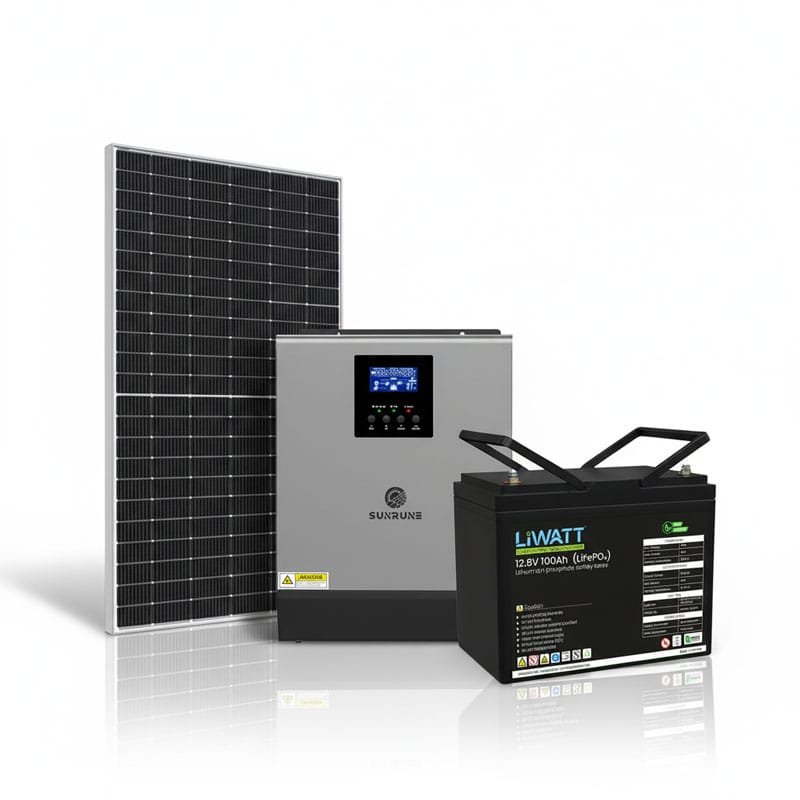
Off-Grid Solar Systems Pretoria
Need a reliable power solution without depending on an electricity grid connection? An off-grid solar system combines solar panels, battery storage and an inverter to supply electricity to your property independently of the grid.
We help homeowners and businesses plan off-grid solar systems around their actual electricity consumption, essential appliances and backup requirements. The goal is to build a system that suits your property rather than choosing equipment based on guesswork.
The right system starts with understanding what you need to power, how long you need it to run and how much energy you use each day.
Contact Us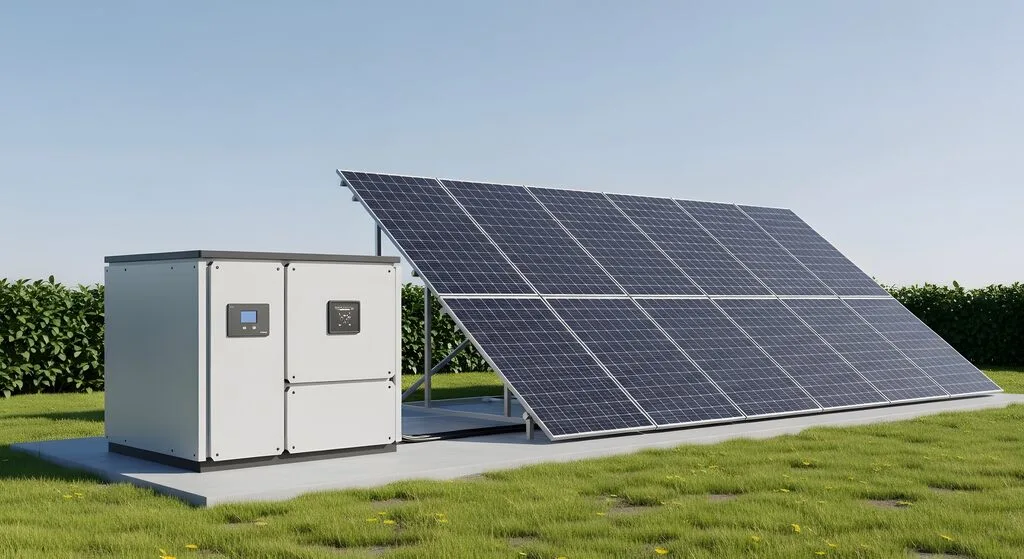
How Does an Off-Grid Solar System Work?
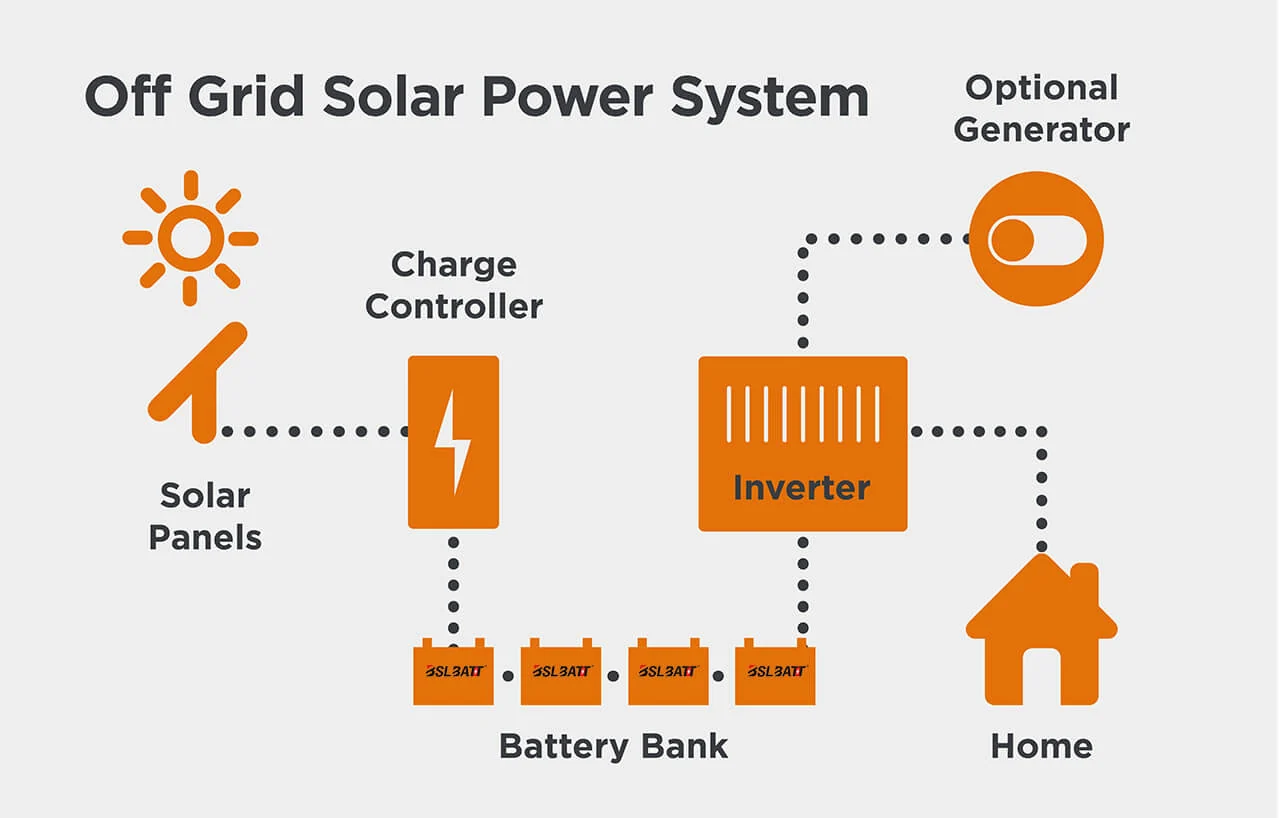
An off-grid solar system generates and stores electricity on your property. Unlike a grid-connected system, it is designed to supply your electrical loads without depending on the public electricity network.
Solar Panels
Panels capture sunlight and generate DC electricity. The amount produced depends on sunlight, panel capacity, orientation, shading and weather conditions.
Off-Grid Inverter
The inverter manages the system's power flow and converts electricity into the form required by compatible household or business appliances.
Battery Storage
Batteries store usable energy for periods when solar production is low, including evenings and suitable periods of reduced sunlight.
Power for Your Property
The system supplies connected loads within its designed capacity. Correct sizing helps prevent excessive demand from overwhelming the inverter or exhausting the batteries too quickly.
Is Off-Grid Solar Right for Your Property?
Off-grid solar can be a practical option when you want to operate independently of the electricity grid. However, not every property needs a fully off-grid system. The right choice depends on your location, energy usage, budget and reliability requirements.
- Properties without a grid connection: Generate and store electricity where connecting to the grid is unavailable or impractical.
- Remote homes and suitable rural properties: Plan a dedicated power supply around daily household needs.
- Homes seeking greater energy independence: Reduce reliance on external electricity supply with enough generation and storage for your requirements.
- Businesses with essential electrical loads: Plan power for selected equipment, lighting, security or other critical operations.
When Should You Consider a Hybrid System Instead?
If your property already has a grid connection and you mainly want to reduce electricity use while maintaining battery backup, a hybrid solar system may be a more practical option.
A fully off-grid installation usually needs more careful planning because solar and battery storage must cover your demand without relying on the grid during periods of low generation.
Before choosing a system, consider your daily energy consumption, the appliances that must remain operational, available roof space and the level of independence you want to achieve.
Off-Grid Solar Systems for Homes and Businesses
Different properties have different electricity demands. A home may need power for lighting, refrigeration and everyday appliances, while a business may need to keep specific equipment operating throughout the working day. We plan each off-grid solar solution around the property's actual requirements.
Off-Grid Solar for Homes
A residential system can supply selected household circuits or a wider range of appliances, depending on its capacity. We consider cooking equipment, refrigeration, lighting, water pumps and other loads before determining the panel, inverter and battery requirements.
Independent Power for Remote Locations
Where a grid connection is unavailable or impractical, an off-grid system can provide an independent electricity supply. The design must account for daily consumption, seasonal sunlight, battery storage and any additional backup requirements.
Off-Grid Solar for Businesses
Offices, workshops and suitable commercial properties can use off-grid solar to supply planned electrical loads. We consider operating hours, equipment demand, starting currents and which operations cannot afford an unexpected power interruption.
Power for Critical Equipment
Some properties do not need every appliance running at once. Prioritising essential circuits can help keep system requirements manageable. The design should clearly identify what the system can support at the same time.
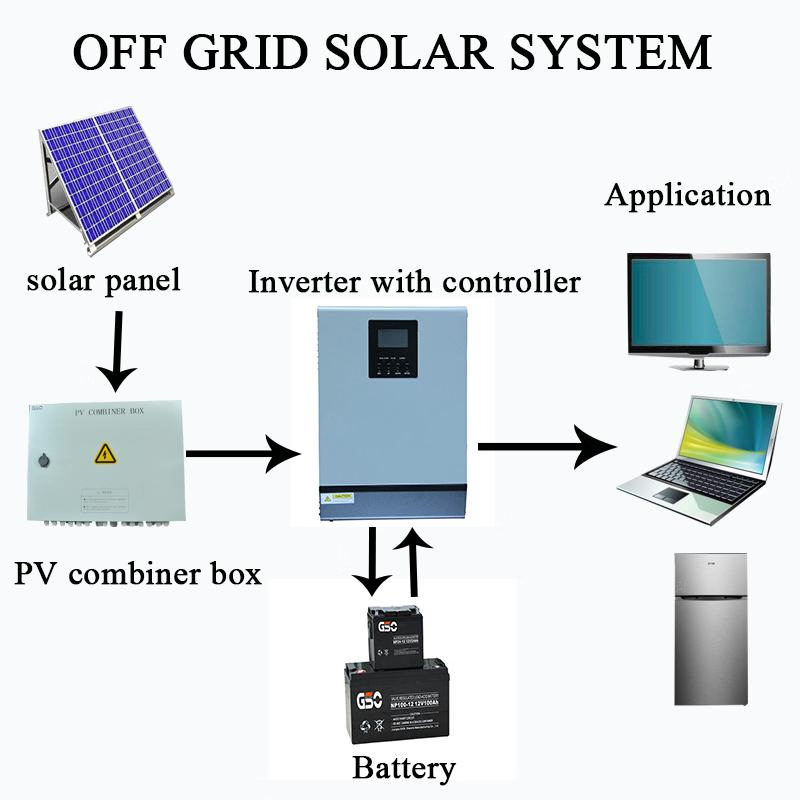
System components must work together to meet the property's energy and storage requirements.
What Does a Complete Off-Grid Solar System Include?
Panels alone cannot provide dependable off-grid electricity. A complete installation needs compatible equipment that generates, converts, stores and safely distributes power.
- Solar panels Generate electricity from sunlight. Panel capacity and layout depend on daily energy demand, available roof or ground space, shading and expected solar production.
- Off-grid inverter Converts electricity into usable AC power and manages supply to connected loads. Its continuous rating and surge capacity must suit the equipment being powered.
- Battery storage Stores energy for use when solar production cannot meet demand. Usable battery capacity, discharge limits and expected backup duration matter more than simply counting batteries.
- Mounting, cabling and electrical protection Correctly selected mounting structures, isolators, breakers, cabling, earthing and other protection equipment help create a safe and maintainable installation.
- Monitoring and system controls Suitable monitoring helps track energy production, battery state of charge and consumption, making it easier to identify changing usage patterns and potential problems.
How We Size an Off-Grid Solar System
One of the biggest mistakes when choosing off-grid solar is buying equipment based only on the number of panels or the advertised inverter size.
Your system must generate enough energy over time, supply the appliances you use simultaneously and store sufficient electricity for periods when solar production falls.
We assess the following factors before recommending a system configuration for your Pretoria property.
- Daily electricity consumption Electricity bills, meter readings and an appliance list help estimate how many kilowatt-hours your property uses each day. Seasonal and future changes should also be considered.
- Peak demand and starting loads The system must handle appliances that run at the same time. Pumps, compressors and certain motors can draw extra power when starting, so inverter surge capacity may be important.
- Battery capacity and backup duration We consider which appliances need to operate after sunset or during extended periods of low sunlight. Battery sizing should account for usable capacity and permitted depth of discharge.
- Solar production and available space Roof orientation, shading, panel placement and expected sunlight influence how much electricity the array can generate and how effectively it can recharge the batteries.
- Essential circuits and future requirements We identify priority loads and consider planned additions such as more appliances, a water pump or other equipment. This helps avoid selecting a system that becomes inadequate too quickly.
- Property conditions and backup options Installation space, electrical requirements, maintenance access and the consequences of prolonged poor weather all influence the final design. Some properties may benefit from a suitable generator or another backup arrangement.
Our Off-Grid Solar Installation Process
A dependable off-grid installation begins with a clear understanding of your energy needs. The assessment and design stage helps prevent mismatched equipment, insufficient battery storage and unrealistic expectations about what the system can power.
Every installation should follow a site-specific design and appropriate electrical safety requirements.
-
Understand Your Electricity Needs
We establish which appliances and circuits you want to power, how much electricity you use and how much independence you require from the grid.
-
Assess the Property
The assessment considers roof or ground-mount space, shading, equipment placement, electrical conditions, cable routes and any site-specific installation constraints.
-
Design the Solar and Battery System
Panel capacity, inverter output and usable battery storage are matched to your expected consumption, peak demand and backup requirements.
-
Select Compatible Equipment
Equipment is selected around system specifications, compatibility, protection requirements, warranty conditions and the availability of suitable components.
-
Install, Test and Handover
The installation is completed and the system is checked against its design. Handover should cover safe operation, monitoring, maintenance and the system's operating limits.
Off-Grid vs Hybrid vs Grid-Tied Solar Systems
Choosing the right solar setup matters as much as choosing the equipment. The main difference is how each system uses the grid and whether it stores electricity for later use.
| Feature | Off-Grid Solar | Hybrid Solar | Grid-Tied Solar |
|---|---|---|---|
| Grid connection | Designed to operate without relying on the grid. | Uses solar, battery storage and a grid connection where available. | Operates connected to the electricity grid. |
| Battery storage | Normally essential to cover periods without solar generation. | Can store solar energy for later use and backup. | May operate without batteries. |
| Main priority | Independent electricity supply. | Combining solar savings with storage and grid support. | Using solar generation to reduce grid electricity consumption. |
| Key design concern | Enough generation and storage for changing weather and demand. | Balancing solar generation, battery capacity and grid usage. | Matching solar generation to consumption and connection requirements. |
| Potential fit | Remote sites or properties seeking independence from the grid. | Connected properties that want battery backup and grid flexibility. | Connected properties primarily focused on reducing grid consumption. |
Actual system behaviour depends on inverter design, configuration, battery provision, electrical installation and applicable connection requirements.
If you want battery backup while keeping a grid connection, explore our hybrid solar systems in Pretoria. If your priority is solar generation while remaining grid-connected, see our grid-tied solar systems.
Choosing the Right Off-Grid Solar Equipment
Reliable performance depends on how the complete system works together, not just the reputation of an individual brand. Equipment should suit your power requirements, installation conditions and plans for future energy use.
Solar Panels
Compare panel output, dimensions, efficiency, product specifications and warranty terms. The array must fit the available space and generate enough energy for consumption and battery charging.
Inverter Capacity and Compatibility
The inverter must support the expected continuous loads, starting surges and battery configuration. Not every inverter designed for a grid-connected installation is suitable for independent off-grid operation.
Battery Performance
Review usable capacity, discharge limits, charging requirements, operating conditions and inverter compatibility. These factors affect practical backup duration and long-term operation.
Solar panel examples: LONGi, Jinko Solar, JA Solar, Canadian Solar and Trina Solar.
Inverter examples: Victron and other manufacturers offering suitable off-grid configurations.
Battery examples: Pylontech, Hubble, Freedom Won, Dyness and BYD, subject to system compatibility and availability.